
Defence Minister A K Antony on Tuesday indicated a revamp of the Defence Research and Development Organisation, to give it capability to produce futuristic systems within the country."DRDO will have to play a crucial role in providing strategic defence with suitable delivery systems to the nation," Antony said. The DRDO and the end-users, the armed forces, would have to work with greater synergy to achieve the goal of self-reliance and minimise dependence on foreign nations.

Frequent sanitisation of the entire parliament complex will also be carried out, while arrangements have been made to sanitise various parliamentary papers as well as footwear and cars of MPs, officials said.
As protests rage in Kudankulam and reach a crescendo, V Ponraj, scientific advisor to Dr A P J Abdul Kalam, speaks about the report he and the former Indian President prepared in this interview with rediff.com's Shobha Warrier.
Scientists at the Leh-based Regional Research Laboratory have cross-bred the region's famous yaks with high yielding Swiss cows to produce a new breed, which can withstand extremely high altitudes.

The missile has a strike range of 2000 km, the sources said soon after it blasted off from a mobile launcher at the Launch Complex-4 of the Integrated Test Range, the sources said.
This is the first of a four-part series on the DRDO, which has instituted fundamental changes in the way it will approach equipment development.
After failing to hit its target in the previous test, a new version of the 290 km-range supersonic BrahMos cruise missile was on Wednesday successfully test launched at a firing range in Pokhran in Rajasthan.
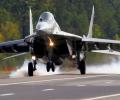
The procurement will come at a cost of Rs 38,900 crore.

The approved proposals included "procurement of night sight (image intensifier), light vehicles GS 4X4, air defence fire control radar (light) and GSAT-7B satellite," it mentioned.
The grenade will help them to smoke out terrorists from their hiding without any bloodshed and save hostages. The 'chilli smoke grenade' will irritate eyes, skin and respiratory traits, inflicting an immediate breathing difficulty and swelling of eyes to force the persons to come out in the open.

During the day-long debate, the lines between science and religion often got blurred with many invoking religious texts and the contribution of 'rishi munis' to highlight India's tryst with the extra-terrestrial world.
The indigenously built multi-target missile can carry a 50kg payload.
The army confirmed that they will buy 12 Nishant Unmanned Aerial Vehicle for reconnaissance and surveillance operations, a top Defence Research and Development Organisation official said on Friday.

As China continue to hold military drills near Taiwan coast after United States House Speaker Nancy Pelosi's recent visit to Taipei, President Tsai Ing-wen has appealed for international support for the island nation and halt the escalation of the regional security situation.

'The range of purchases throw a light on India's threat perception as also its perceived role of being a stabilising influence in the region,' says Brigadier S K Chatterji (retd).
Former President A P J Abdul Kalam said the Pokhran tests of 1998 were successful as desired yield was obtained. Kalam was reacting to former senior Defence Research and Development Organisation scientist K Santhanam's contention that Pokhran-II tests had not met the desired objective.

Air Chief Marshal Bhadauria said the recent induction of Rafale jets along with previous acquisitions of C-17 Globemaster aircraft as well as Chinook and Apache helicopters have provided the IAF with substantial tactical and strategic capability enhancement.
"The Prithvi missile was test-fired as part of a user's trial by the Indian Army and the test was successful," defence sources said. The 8.56 metre-long and one metre thick Prithvi missile can carry a pay load of 1000 kg explosives.
The PM said that India stood for peace and for peaceful resolution of all problems between nations.
After failing to hit the target in the previous test, the Defence Research and Development Organisation is planning to test-fire the Block II version of the BrahMos supersonic cruise missile on March 4."We are planning to conduct the second test of the BrahMos Block II version at the Army's test range in Pokharan on March 4 this week," Defence Ministry officials said.
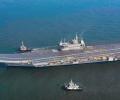
INS Vikrant is being delivered about six years late and at a cost of about Rs 20,000 crore instead of the sanctioned Rs 3,261 crore.

'An armed helicopter equipped with counter-drone systems will provide the airborne counter-drone capability and flexibility needed to protect India's critical assets.'
This will be the second launch of the 3,000-km range missile after an unsuccessful test on July nine last year from the integrated test range at Wheeler Island near Balasore in Orissa, defence officials said.
The DRDO has clearly decided that developing technologies is at least as important as developing weapons systems. V K Aatre, DRDO chief from 2000-04, had said, "Weapons programmes and technologies have to maintain equal pace." Only now is the DRDO heeding his advice.

The two PMs may also explore ways to further deepen ties between the navies of the two countries to check China's heightened activities in the Indian Ocean.
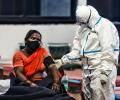
In addition, 22,533 'Make in India' ventilators have been delivered to various states, Union territories and central institutions, the ministry said, adding that the Centre is also ensuring the installation and commissioning of the machines.
India is deploying cutting-edge technology to defeat a simple insurgent weapon that J&K militants and Naxals are using to lethal effect: the Improvised Explosive Device, or IED. Swedish company Saab has offered to partner India's Defence Research and Development Organisation in fitting Saab's CARABAS radar on India's Dhruv Advanced Light Helicopter (ALH), which would allow the scanning of wide swathes of territory to detect IEDs well before they can be exploded.
After three successful ballistic missile tests during the last fortnight, the Defence Research and Development Organisation is finalising preparations for the big one.
K Santhanam, former Defence Research and Development Organisation scientist, who has rubbished the nuclear test at Pokhran in 1998 told journalists that he believed India neede to conduct two more tests to perfect the thermo-nuclear technology required to make a Hydrogen bomb. Santhanam maintained that simulations or computer-based tests were not enough to perfect thermo-nuclear technology. His statements are an antithesis of the Indian governments' position on this issue.
Agni 5 is not China-specific, as some have claimed. It is essential to India's overall security and should be followed by a submarine-launched version, says Premvir Das
The Indian army will have to wait four to five years to acquire Inter-Continental Ballistic Missile Agni-5, which was successfully tested on 19 April by the Defence Research and Development Organisation. Sheela Bhatt reports
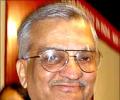
Dismissing a top nuclear scientist's contention that Pokharan II was not a complete success, Atomic Energy Commission chief Anil Kakodkar on Friday said the tests in 1998 achieved '100 per cent desired results'.Speaking at a function organised by the Raja Ramanna Centre for Advanced Technology in Indore, Kakodkar said, "Pokhran II tests were a complete success and they achieved 100 per cent desired results."
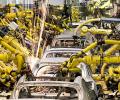
The ministry informed that over 14,000 existing ventilators are earmarked for COVID-19 patients in various hospitals in the country while there are 11.95 lakh N-95 masks in stock.
India will join the elite club of nations having ICBM with the Defence Research and Development Organisation planning to carry out the launch of over 5,000 km-range Agni-5 missile in April.

India on Monday successfully test-fired its nuclear-capable Agni-II missile intermediate range ballistic missile, with a range of 2000 kms, from the Wheelers Island off Orissa coast.
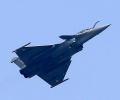
In its report tabled in Parliament, the national auditor said the Dassault Aviation and the MBDA proposed in September 2015 to discharge 30 per cent of their offset obligations by offering high technology to the Defence Research and Development Organisation (DRDO), but the two firms are yet to do it.
India's ability to win a quick, pre-emptive war against Pakistan has just been enhanced by a useful new set of teeth.

A noted defence scientist on Wednesday rejected suggestions that China's new missile Chaoxun-1 (CX-1) was a copy of Indian supersonic cruise missile BrahMos. The technology used in CX-1 and BrahMos, an Indo-Russian joint production, was completely different, said A Sivathanu Pillai, who formerly served as Chief Controller of Research and Development at Defence Research and Development Organisation.
India's indigenous Light Combat Aircraft Tejas has successfully completed air-to-air close combat missile firing tests, ahead of its clearance for induction into the Indian Air Force.
 © 2026 Rediff.com - Advertise with us - Disclaimer - Privacy Policy - Sitemap - Feedback - About us - Terms of use - Grievances